Pages

Pages

Wednesday, 30 November 2011

The top five members of a violent criminal street gang centered around West 137th Street in Central Harlem, are heading to prison.


 Leader Jaquan Layne, 21, was sentenced to 20 years to life in prison; his brother, Jahlyl Layne, 18, who oversaw sales of crack cocaine, was sentenced to 7½ to 23½ years in prison; Jonathan Hernandez, 19, convicted of a gang-related shooting, was sentenced to 15 years and 2 months to 17 years and 4 months in prison; Habiyb Mohammed, 31, who packaged the crack cocaine, was sentenced to 15 years to life in prison; and Jeffrey Brown, 20, who sold the crack cocaine, was sentenced to 15 years to life in prison. “The defendants derailed their lives and the lives of the teens they recruited to join their criminal operation, but the damage they inflicted upon these young people and their surrounding community does not have to be permanent,” said District Attorney Cyrus Vance Jr.. “The sentences imposed were fair and thoughtful. For some of the 14 defendants in this case, the sentences are not merely punitive – they also make use of alternatives to incarceration and set achievable benchmarks for particular defendants, such as graduating from high school and staying off drugs and out of trouble. On October 20, 2011, a jury in State Supreme Court convicted the defendants – members of crews known as “2 Mafia Family” (2MF or 2DEEP) and “Goons on Deck” (G.O.D) – on charges related to the running of a profitable crack cocaine operation between June 2008 and February 2011. In addition to the possession and sale of crack cocaine, the defendants conspired to possess semiautomatic handguns, revolvers and ammunition in order to maintain their dominance of the geographic area centered on West 137th Street between Lenox and Seventh Avenues, and to discourage incursions by rival street gangs. With this verdict, all 14 defendants who were indicted on related charges have been convicted.

Monday, 28 November 2011

Marvel character, Erik Lensherr a.k.a. Magneto, has apparently infringed the copyright of the King of Spain

Marvel character, Erik Lensherr a.k.a. Magneto, has apparently infringed the copyright of the King of Spain in Ultimate Marvel vs Capcom 3, with the Zarzuela Palace claiming the X-Men villain's alternate costume is identical to the military uniform worn by King Juan Carlos.


Representitives for the Zazuela Palace have contacted the Spanish distributor of the game in the region, Koch Media, to warn them of possible copyright infringement.

This isn't the first time the Spanish Royal's has stamped their feet over the strong resemblences, as Marvel faced a similar dispute when Magneto first donned the uniform in The Pulse: House of M Special X-Men special.

Saturday, 26 November 2011

TWO families are rejoicing after two men held in a Spanish prison were set free after four-and-a-half months


Kyle Thain, 24, and James Harris, 29, have been released on bail from Font Calent jail in Alicante.

This has left family members and friends overwhelmed – and they haven’t given up hope of getting them back to Britain for Christmas.

Kyle’s brother Jay, 29, said: “This is the best I have felt in a long while. It’'s amazing news.”

Sharon Harris, 56, Kyle’s mother, and husband Dave, 58, sold their Southend home to help fund the legal fight.

Yesterday, £8,000 was transferred to Spain for each of the lads’ bail.

Kyle of Sandringham Road, Southend, and James, of Pelham Road, Southend, have been held without charge since July 8. They are accused of attempted murder after two men were stabbed during a bar brawl near Alicante, close to where they were staying on a lads’ weekend away. They were arrested as they went to board the flight home.

The two pals have always maintained their innocence and insist they did not even set foot in the bar where the violence took place. Their families are convinced there has been a terrible case of mistaken identity.

Kyle and James are now due to leave prison today once funds have cleared. Jay and Sharon will fly out tomorrow where they will be reunited with Kyle and James who will stay with James’s mother Kate Burgess who has been in Spain since their arrest.

The decision on bail was finally made after a judge was presented with evidence that has been available all along.

Jay said a previous solicitor had told a judge that Kyle and James had pictures of them at their apartment around the time of the bar fight.

The new solicitor apparently put the time and date stamped pictures in front of the judge and said they convinced him it was sufficient evidence to at least release Kyle and James from jail.

A previous bail application in September was denied earlier this month and Kyle’s mum Sharon said she was beginning to prepare for Christmas being a “non-event”.

But now the two families are looking forward to trying to clear the names of Kyle and James once and for all.

Jay, also of Sandringham Road, added: “This is a really positive step in the right direction.

“The aim is to try and get them bail to the UK and to continue fighting for the case to be dropped completely.”

Since Kyle and James were arrested family and friends in south Essex have rallied in support with fundraising events netting thousands of pounds for the legal fight.

Thursday, 24 November 2011

European banks, vowing to sell distressed assets as regulators tighten capital requirements, are lending money to buyers to get deals done.

European banks, vowing to sell distressed assets as regulators tighten capital requirements, are lending money to buyers to get deals done.

Royal Bank of Scotland Group Plc (RBS) may provide as much as 600 million pounds ($939 million) in debt to help Blackstone Group LP acquire part of a 1.4 billion-pound portfolio of commercial mortgages from the bank after the private-equity firm struggled to get outside funding, three people with knowledge of the transaction said. The deal, scheduled to close within weeks, follows Credit Suisse Group AG (CSGN)’s agreement to finance the sale of $2.8 billion of property loans to Apollo Global Management LLC in December, two people with knowledge of the matter said.

“The use of vendor financing to de-lever defeats its own purpose,” said David Thesmar, a professor of finance at HEC Paris, a business school. “The assets may become safer because the buyer injects equity, but the actual gain in core Tier 1 capital ratio for the bank isn’t as great as if it was purely and simply sold. It shows banks’ deleveraging is going to be tougher than planned.”

The increase in vendor financing reflects the challenge European banks (BEBANKS) face selling their distressed loans and avoiding greater losses as the sovereign-debt crisis deepens. Lenders have pledged to cut assets by more than 775 billion euros ($1.05 trillion) within two years as regulators require them to meet a 9 percent core capital ratio earlier than planned and urge them to reduce funding needs.

former British hotel owner who retired to Spain with her husband has died after contracting a deadly disease from a sandfly.


Susan Hughes, 67, from Enfield, in North London, moved to Malaga in 2004 with her husband Tony to enjoy an early retirement after running a hotel in North Wales.

But in August this year the mother-of-two contracted black fever - a rare parasitic disease, after she was bitten by a sandfly.


Susan Hughes, 67, had retired to Malaga with her husband Tony when she suddenly fell ill. Mrs Hughes was taken to a nearby hospital where doctors couldn't diagnose her condition and put her in isolation

'She felt very ill so we went to see her local GP,' Mr Hughes said.

'Her temperature was very high and we knew something was wrong.'

Mrs Hughes was rushed to A&E at Velez Malaga hospital where doctors couldn't diagnose her condition and put her in isolation.

Blood samples were then sent to Barcelona. When they were returned a week later they revealed that Mrs Hughes had visceral leishmaniasis or black fever.

'They knew what they were up against after that,' said Mr Hughes.


WHAT IS BLACK FEVER?

Black fever is a common killer in the Indian subcontinent, which accounts for more than 90 per cent of cases.

It can also occur in southern Europe although there are only a handful of cases each year and few fatalities.


Deadly: It is the female sandfly which transmits the bacterial infection between hosts

It is usually transmitted through the bite of female sandflies with symptoms typically emerging a few weeks afterwards. These include fatigue, weight-loss and fever followed by an outbreak skin sores.

There are no vaccines or drugs to prevent infection, but treatments include the anti-fungal drug Amphotericin B. The disease if fatal if untreated and those with suppressed immune systems are most at risk.


She was given a blood transfusion because the parasite had got into her blood, but doctors were unable to save her. She died on September 11, leaving her husband and a son and daughter from a previous marriage.

Mrs Hughes had a compromised immune system because she was taking anti-rejection drugs for a liver transplant she received in 1983.

'They tried everything but she couldn’t fight it because her immune system was low,' Mr Hughes said.

Over the last few days she developed black blotches on her arms and chest and scabs on the roof of her mouth – typical symptoms of the deadly disease.

'She was delirious towards the end because her temperature was over 40. The doctors said she died of septicaemia in the end,' said Mr Hughes.

Doctors said it was likely the sandfly picked up the disease from an infected dog, although tests from the couple's pet came back negative.

The couple, who had run a hotel together in Llandudno, had lived in a caravan for their first two years in Spain while their dream home was being built in Malaga.

'It’s just a shame we came to Spain for a good life, and yet if we’d stayed in the UK she’d have still been alive,' said Mr Hughes.

'She did have a chance to enjoy it and we had a good life together. It’s just a shame it was so short.'

Mr Hughes met his wife in Wolverhampton in 1983, just months before she had the liver operation that was to grant her 28 extra years of life.

At 39, she’d been given just six weeks to live but was handed a second chance through the transplant.

'I thought she had a very good suntan, but she was actually jaundiced because of the cirrhosis,' said Mr Hughes.

After the operation the couple had a happy life together, running a hotel for many years before their retirement.

Tuesday, 22 November 2011

Russians buying property in Spain, they are able to obtain a visa for visits and this has the added benefit of making travelling around Europe easier

There has been a surge of interest from Russians looking to buy residential property in Marbella this year having been attracted by the region's climate, glamorous lifestyle, beautiful scenery and choice of upmarket homes, it is claimed.

Fine & Country said it has had a large number of Russians visit their office at the Marbella Club Hotel over the summer months, according to Laurent Coulée sales director.

‘The number of Russians looking to buy homes in the area has doubled since last year. They are typically looking for high value properties on the coast and on exclusive estates such as La Zagaleta and Sierra Blanca that are renowned for their good quality homes and high levels of security,’ she said.

Part of the attraction to buy property in Marbella is the amount of flights available from Russia to Malaga. Twenty airlines have direct routes to Malaga from major cities and from Moscow there are 81 flights per week. Marbella is regarded as a manageable 45 minutes drive from Malaga airport.

‘If Russians buy property in Spain, they are able to obtain a visa for visits and this has the added benefit of making travelling around Europe easier. Many also prefer to invest in property in another currency to spread the currency risk, so as to not have all their investments in the Ruble,’ explained Coulée.

The higher end property market in Marbella and the surrounding region has remained buoyant during the economic downturn and has been given a recent boost by plans to build a new port and marina just east of the centre that will be one of the largest projects undertaken in Marbella recently. The €100 million investment by Qatar Sheikh Abdulla Ben Nassar to transform the existing port will see provision for over 1,200 berths, capacity to take cruise liners, plus construction of a new hotel, shops and restaurants.

Monday, 21 November 2011

Prison for man who left €5,000 bill at Marbella hotel


A MAN has been sentenced to a year in prison for failing to pay a bill of more than €5,438 at a luxury Marbella hotel. He had been staying at the Marbella Club on the Golden Mile for a week in September 2003 and during the stay, used different services which amounted to €5,438, which he left without paying. The hotel made a formal complaint but the trial wasn’t held until this year mainly due to difficulties locating the man. He admitted that he has stayed at the hotel but had refused to pay the bill because he thought it excessive for the services he had received. His lawyer maintained that he attempted to reach an agreement with the hotel, which the manager claims that he had shown no intention of paying, and that until the day of the trial, when he handed in €3,349, he hadn’t received any money from him. The judge considered that the man had intended to commit fraud and he was sentenced to two years in prison and the payment of the bill plus interests. He appealed, and Malaga Provincial Court, although maintaining that he intended to commit fraud, reduced the sentence by one year because he had attempted to repair some of the damage by bringing a large part of the money he owed to the trial to give to the hotel.

"maturity" of Spaniards in voting for the party that "sugar-coated the pill" the least.

Several Spanish papers urge the leader of the centre-right Popular Party (PP) Mariano Rajoy to waste no time in tackling the country's economic crisis.

One paper praises the "maturity" of Spaniards in voting for the party that "sugar-coated the pill" the least.

Another points out that the electorate in Spain had a say in opting for austerity, unlike the voters of Italy and Greece.
Headline in El Mundo

The PP sweeps away the Socialist Party
Editorial in El Pais

The PP yesterday achieved a clear electoral victory, the largest in its history in the percentage of votes and the number of deputies. In turn the PSOE [Socialist Party] achieved its worst result since democracy was restored.
Report in ABC

Over 44 per cent of Spaniards back Rajoy… confident that a change of ruling party would provide a way out of the crisis. Spain will be a country which has voted - unlike Greece and Italy, where the government was not chosen by the citizens.
Editorial in La Razon

Hard and difficult times are on their way and, faced by them, the Spanish people have shown admirable democratic maturity by fully trusting the party which sugar-coated the pill least during the electoral campaign. While the Popular Party did not conceal the need for sacrifices, other groups, starting with the Socialist Party, fed the fear of cuts.
Editorial in ABC

The PP victory was a success for Mariano Rajoy who has seen his strategy of moderation and independence confirmed - but with it comes an unprecedented burden of responsibility.
Editorial in El Pais

A crisis which will not be resolved without sacrifices. Rajoy avoided specifying the sacrifices during the election campaign, stressing the benefits that would supposedly be brought by a simple change of leadership. The seriousness of the economic situation now demands that he abandon ambiguity, reveal his programme for government as soon as possible and announce the team that will carry it out.
Report in El Mundo

After the crushing victory… comes the hour of truth. That of governing with the firmness required by the moment. And to govern now. Extraordinary situations require extraordinary measures… The future prime minister must come out of his den and tell the Spaniards who gave him a majority that this is the situation, this is what we are going to do and these are the people who are going to do it. We cannot waste time we do not have.

Partido Popular has won the Spanish General Election and will have an overall majority in Congress.


35.7 million Spaniards had the chance on Sunday to decide who is going to govern them for the next four years. It’s the largest ever number, 700,000 more than in 2008.

The voting system in Spain, Ley D’hondt, drawn up at the end of the 19th century by the Begium lawyer, Victor D’Hondt. It favours the largest parties and goes against the smaller parties such as IU and UpyD, and is also the system used in Argentina, France, Belgium, Finland, Ireland, Israel and Japan. 350 deputies represent 52 constituencies and they are assigned according to the LOREG, the Organic Law for the General Election Regime.

Ceuta and Melilla have one deputy each and the rest of the provinces have two deputies as a minimum, and the rest are distributed according to the population ‘empadronada’ in each municipality, This gives Madrid 36 deputies, Barcelona 31 while Soria provinces has just the two minimum.

In each constituency any candidate who has not obtained 3% of the vote is excluded. The rest are put in order of largest vote to smallest vote, and then the number of votes obtained by each candidate is divided by half until a number equal to the number of deputies in the constituency us reached. The seats are assigned by order from the largest to the smallest.

The General Election has cost 124 million, 5.8% down on 2008. 600 million fewer candidate papers have been printed than in previous years and a smaller paper for the Senate has allowed for three million to be saved.

Servisair staff to strike at Liverpool airport


John Lennon Airport in Liverpool is to see a set of strikes from ground workers this week. The news came via an announcement from the GMB, one of the largest unions in Britain, which represents Servisair ground workers. The union said on Sunday that employees in Liverpool would begin a set of walkouts on Wednesday beginning at 05:00 GMT followed second and third set of strikes on Friday. The organisation added it is to continue the pattern in following weeks indefinitely and has also called for a ban on employees working overtime. According to union officials, the industrial action comes as a protest following 47 redundancies recently announced by Servisair, which provides ground services for numerous airlines. Eddie Parker said on behalf of the union that 85 per cent of its members had voted in favour of action that included strikes. He said that Servisair had initially put up to 75 per cent of local jobs at risk for redundancies and that the firm was already making a profit at a time when unemployment was rampant in Merseyside, which he said was ‘unacceptable’. Meanwhile, Robin Tudor, spokesman for Liverpool John Lennon Airport, said that Servisair had initiated contingency plans and that it would be ‘business as usual’ at the facility this week.

Sunday, 20 November 2011

U.K. tax falls on overseas property investors


Overseas property owners based in the UK are about to be targeted by a new HM Revenue & Customs "affluent unit", which has been set up by the British government to address what it sees as tax avoidance by the rich.Photo 20minutos.es What next I wonder?? A new team of 200 taxation investigators and specialists has been established by HMRC to identify wealthy individuals who, amongst other things, own land and property abroad … such as a holiday home. OPP understands that the tax attack unit will concentrate on overseas property assets first, and then switch its attention to UK-based commodity traders (who have been accused of helping to drive up food prices,) before looking into the number of UK residents who hold offshore investment accounts. HMRC says that it will be using sophisticated "data mining" techniques to try and track down people who own overseas properties, but do not pay the right amount of tax. This might include someone who owns a villa in Spain which they are renting out, or an individual who owns a piece of land in France that is being used as business premises, said an HMRC spokesman. The experts will be looking for people who do not seem to be declaring the correct income and gains. The new unit, which has been announced by the UK’s Chief Secretary to the Treasury, Danny Alexander, will focus solely on people paying the 50% top tax rate. David Gauke, the exchequer secretary to the Treasury, said there would be "no hiding place" for tax cheats, adding that the UK government “is committed to tackling tax evasion and avoidance across all areas of the economy. That is why we allocated HMRC £917m to reduce the tax gap over the next four years. This new team is part of that investment." Ronnie Ludwig, tax partner at accountancy group Saffery Champness told OPP that “those who have been letting out their foreign property and declaring the rents received have nothing to fear, but those who own foreign property which has never been let out should be prepared to prove to HMRC that they have received no income from the property.” “This will involve producing UK and foreign bank statements and being able to demonstrate that they could afford to purchase and maintain the property out of normal declared sources."

The Government blames the judges for the Málaga drugs theft


300 kilos of cocaine was taken from a warehouse in Málaga portPhoto EFE Government sub-delegate for Málaga, Hilario Lopez Luna, has blamed the judges for the theft of 300 kilos of embargoed cocaine from a warehouse in Málaga port. He said that despite requests being made for authorisation to destroy the drugs, that permission had not arrived from the judges, and that was why there was so much drugs being stored. He said that the drugs taken had already been analysed and the judges have samples so no ongoing investigation would be affected. López Luna denied knowing about the security problems at the warehouse, saying he had never received any information on the subject from the Guardia Civil or anyone else. He said the warehouse was manned weekdays between 7am and 3pm by a private security firm, and for the rest of the time the Guardia Civil had the key. The thieves broke into the warehouse on Saturday night last weekend. His comments have been criticised by the judiciary. ’You can’t move the responsibility now from the administration to the judiciary’ said the President of the Andalucia High Court of Justice, Lorenzo del Rio. The judge noted that ‘the law obliges the immediate destruction of seized drugs’, after samples are taken. ‘Until they can show me documents showing that the destruction of the drugs was pending permission, I will think that it was already authorised’, he said.

20 arrested for sexual exploitation of women


The case started with the arrest of a mother in Vélez-Málaga who obliged her children to prostitute themselvesTwo groups which dedicated their time to the sexual abuse and exploitation of women have been broken up by Spanish police. The case resulted from a police investigation in Vélez-Málaga into two children who were obliged to prostitute themselves by their mother. A total of 20 arrests have been made in Málaga, Girona and Madrid, including two thought to be the heads of the operation who were arrested in Figueres, Girona. The groups operated in clubs and private homes and the women were forced to work round the clock and consumer large amounts of alcohol and drugs. They would often be beaten if they refused any request. Six people have been charged for crimes linked to prostitution and corruption of minors, while the rest face charges of prostitution and acting against the rights of workers.

British woman falls off hotel balcony when having sex


There has been another case of balconing in Spain, this time in Adeje, Tenerife, and with the twist that the victim was having sex with her husband at the time she fell. The British tourist who fell several metres then got her ankle caught between the bars of an internal staircase was left hanging there, head down and totally naked until the emergency crews arrived. 49 year old A.M.A.M. had been having sex with her husband against the railings on one of the public areas of the hotel and in the frenzy, the railings gave way. The husband called the emergency services and the local and national police arrived with a fire crew. After their initial surprise, the managed to release the woman’s trapped right leg, and she was taken for observation to the Hospitén Sur.

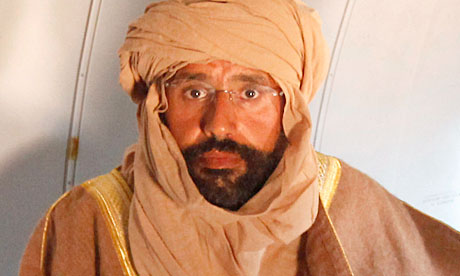
Saif al-Islam Gaddafi is pictured sitting in a plane in Zintan after his capture in Libya's rugged desert.

Saif al-Islam Gaddafi
Photograph: Ismail Zitouni/Reuters

The man who led the fighters that captured Saif al-Islam has said that the late dictator's son tried to escape arrest by pretending to be a camel herder.

"When we caught him, he said, 'My name is Abdul Salem, a camel keeper,'" said commander Ahmed Amur on Sunday. "It was crazy."

His unit, from Zintan's Abu Bakar al-Sadiq brigade, had been patrolling the vast southern desert of Libya for more than a month when it was given a tip-off late last week that Saif al-Islam was close to the town of Obari.

"We knew it was a VIP target, we did not know who," said Amur, who worked as a professor of marine biology in Tripoli before the war.

He said rebel units with pickup trucks mounted with anti-aircraft guns deployed in ambush positions in the desert near Obari, a small town that lies astride roads leading to both Algeria and Niger.

As the informant had predicted, two Jeeps came into view at lunchtime on Friday, surging through the desert near the main highway that leads to Niger.

"When we saw the first car we fired shots ahead of it, not to hit, as a warning. It stopped. Then the second car belonging to Saif came," he said, speaking in English. "We shot warning shots, he (Saif's car) stopped in the sand. Saif and his aide came out of the car."

He said rebel fighters approached on foot, Saif threw himself face down and began rubbing dirt on his face. "He wanted to disguise himself," he said.

Amur raced up to him and ordered him to stand up, finding himself face to face with Saif al -Islam.

But the most notorious son of the late dictator claimed he was not one of the world's most wanted war crimes suspects, but a simple camel herder – Abdul Salem being the equivalent of a British "John Smith".

"His face was covered (with dirt), I knew who he was," said Amur. "Then he said to us, 'Shoot.' When the rebels refused to shoot, and identified themselves, Saif told them: 'OK, shoot me, or take me to Zintan.'

"We don't kill or harm a captured man, we are Islam," said Amur, still clad in the green combat jacket he wore when making the arrest. "We have taken him here to Zintan. After that, our government is responsible."

Zintan was on Sunday hemmed-in by checkpoints set up by its fighters, whose units fought some of the toughest battles of the war, ending in their attack on Tripoli in August.

Omran Eturki, leader of Zintan council, says Saif must face trial in Zintan's own courthouse. "We can try him, it will not take too long, we don't need any new laws," he said, referring to questions over Libya's current legal limbo. "They are Zintanis who captured him so they will have to have him here."

Eturki said it was better to try him in Libya than send him to the international criminal court, which has indicted Saif for war crimes and crimes against humanity.

"The judicial authorities can appoint the judges and the lawyers, but the trial must be here. As long as there is justice, that is it."

He said Saif would get a fair trial. "There is no point to make a revolution for justice, and then you become the same killers. All the people of Zintan want to see him have a proper trial. We don't like to harm him. If we wanted to kill him we could kill him. We captured him so I think we have the right to try him."

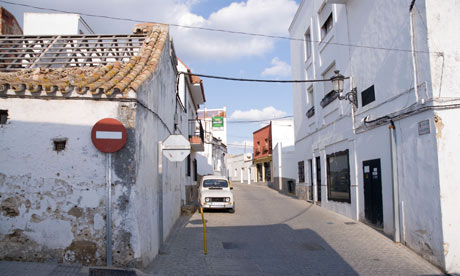
shiny Audis and BMWs that still line the narrow streets of Benalup are a reminder that this Andalucían country town once boasted the greatest number of luxury cars per head in the south-western province of Cádiz.

Benalup Street Andalucia Spain
 Photograph: Tracey Fahy /Alamy

The shiny Audis and BMWs that still line the narrow streets of Benalup are a reminder that this Andalucían country town once boasted the greatest number of luxury cars per head in the south-western province of Cádiz.

These days this charming place, set bull-rearing countryside inland from Gibraltar, holds a different kind of record: not only the worst unemployment rate in the country, but the worst in Europe.

"I don't know whether they can fix this," said 19-year-old Juan Carlos Gutiérrez, one of hundreds of young people who dropped out of school and now drift between part-time work, training courses and the dole queue. "I've picked asparagus and worked in a packing factory, but the jobs never last. The future is screwed."

"Everyone our age is out of work," agreed Nora Pérez, 22, as she waited for the hearse bringing her grandmother to her funeral in the picturesque square of Our Lady of Perpetual Help. "My father went to Germany when he was young. Our generation may emigrate as well. Some of my friends have already left."

A grey-bearded, bespectacled man grins from a campaign poster overlooking the tiny ornamental gardens and bandstand on San Juan Street and calls on the people of Benalup to "sign up to change". He is Mariano Rajoy, the conservative People's party (PP) leader set to become Spain's prime minister at the general election on Sunday.

Rajoy will inherit a country in crisis. Growth is zero and unemployment has hit 23%. In Cádiz province, one in three is jobless. In Benalup 1,500 adults are without work. In a country where 46% of the under-25s cannot find employment, Benalup's unqualified youngsters are getting desperate.

"Many got into debt when times were good, buying houses and cars and starting families," says Ricardo Jiménez, who runs the local branch of the Catholic charity Caritas. "Families are very close and help one another out, but we already help 80 families and more come every month. Some are asking for help to feed their babies," he said. That means almost 5% of the town needs church handouts.

Others are handed money by the town hall or given whatever jobs local politicians can invent. "If we have to dig a ditch we do it by hand, rather than with a digger, because that way we employ more people," said councillor Manuel Moguel.

When Luis Moreno, 23, left school five years ago there was no need to worry about finding a job. All you had to do was walk on to a building site. "It was very simple," he says.

Now he receives €526 (£450) a month to attend a training course designed to turn a dozen locals into graphic designers, though design jobs are not plentiful in Benalup. "We have to learn new skills," he says. He is one of the lucky ones. Courses like this are heavily oversubscribed.

As markets demand ever higher interest payments for lending Spain money, and the European Union instructs its politicians to slash its deficit, public money is drying up. Yields on Spanish debt have now overtaken Italy's and soared to the same levels at which Greece and Portugal needed to be bailed out. And if Spain – a much larger economy – fails, then it may bring down the euro.

Spain's biggest problem remains the money owed to banks for property or land bought during a decade-long boom fuelled by cheap credit. The rows of unsold new homes in Benalup are evidence of Spain's housing bubble, which burst in 2008, leaving 700,000 unsold new houses on the market.

By 2004, more than 80% of Benalup's labour force worked in construction, building homes or holiday apartments along the nearby Mediterranean coast.

"Kids left school at 16 because they could earn €3,000 a month working a three-and-a-half-day week," says Moguel. "I had university-trained engineers working in my company who were earning less than that."

As money poured into people's pockets, the number of banks in town doubled. La Caixa, a newly arrived savings bank, started a local lending war – its manager winning awards. "Kids were buying houses and cars with the loans. And those who already had a house bought another one," says Moguel.

Now the town is plastered with "For Sale" signs from Servihabitat, the real estate branch of La Caixa, which is repossessing properties – though owners must still pay off their full debt after homes have been taken away. "That's unfair. You can't have a bank saying your home is worth €180,000, lending you the money and then repossessing it at half that price," says Moguel, a Socialist. He is uncomfortably aware that Spain's torrid affair with speculative capitalism happened largely on the watch of the Socialist government led by outgoing prime minister José Luis Rodríguez Zapatero.

Even in Benalup, where the Socialists once won 90% of the vote and which still remembers the bloody suppression of an uprising by local anarchists in the 1930s, the vote is now sliding to the right. "It used to be tough in this town to be from the People's party, but we won 43% of the vote at municipal elections in May," says Vicente Peña, a 40-year-old veterinarian who heads the party's local branch.

Peña delivers the same diagnosis of Benalup's ills as his Socialist opponents. "Too many people dropped out of school to become bricklayers. They can't even write a sentence properly."

Vicente Ruiz, owner of the El Buyí bar, will vote for Rajoy. "When Caritas is the biggest employer in town, things are really bad," he says. "It is shameful to have to ask for charity. What we need is a Mrs Thatcher."

Public money is being spent on silly projects, clients in his bar agree. "I've had 60-year-old women coming to bricklaying courses," says one, Nicolás. "It is ridiculous, but they each get their own overalls and hammer."

Peña says that, among other things, people will have to go back to the land. But even there things are going badly. Local horses, bred at stud farms set up as a trophy hobby by nouveau riche local builders, are now being sacrificed for meat and exported to dinner tables in northern Spain.

Pura Raza Española ponies are going for €150. Even fighting bulls are on the decline. "Town halls subsidised many bullfights," says rancher Salvador Gaviria. "But now they have no money, so the market is sinking." The number of bullfights across Spain has fallen by a third as a result.

Benalup is too far inland from the beach to attract tourists. A golf resort set up by a Belgian company, Fairplay, is said to be struggling. The Hotel Utopia, a boutique-style establishment that opened recently, was almost empty this week.

Spaniards hope Rajoy, who has been deliberately ambiguous about his austerity programme and liberal reform plans, can fix their problems. "If changing to Rajoy is going to solve everything, then why haven't the markets – which know he is going to win — shown they trust him?" asks Moguel.

Rajoy will come under immediate pressure to reveal how he plans to square a budget that needs some €41bn of savings next year. Those must come on top of austerity measures already imposed by Zapatero, who cut civil service pay and froze pensions.

Alberto Ruíz Gallardón, PP mayor of Madrid and a probable minister, has called on the socialists to hand over power quickly. "It could be dangerous to prolong the caretaker period," he says.

But parliament does not meet again until 13 December and it may take another fortnight to appoint Rajoy formally. Even if he takes over immediately, jobs are unlikely to reappear in Benalup.

Fortunately it retains the Cádiz tradition of laughing at adversity. Benalup's carnival musical groups are already practising the typicalchirigota songs that parody the powerful. Rajoy, Angela Merkel and the European Central Bank can all expect to feature in them by the time carnival comes around in February.

British bonds win 'safe haven' tag in eurozone debt storm


British government bonds are attracting strong support, in sharp contrast to their troubled eurozone peers as investors seek a safehaven from a debt crisis now spreading to Italy, Spain and even France. British government bonds, or gilts as they are known, are in huge demand largely because the Bank of England is buying them up with newly-created money that it hopes can in turn be used to stimulate an anaemic economic recovery, analysts say. But investors are also reassured by the British coalition government's determined efforts to slash state debt and avoid the severe troubles that have snared the crisis-hit eurozone trio of Greece, Ireland and Portugal.

TWO MILLION EUROS CLAIMED AFTER CANCELLED STONES CONCERT

The council are seeking to claim a total of 2,251,000€

The PP mayor of El Ejido in Almería, Francisco Góngora, has criticized the "negligence" of the former government team and announced that the city council are to begin legal proceedings against the promotions company who were to stage a concert by the Rolling Stones in 2006.

Following the findings of "many irregularities" in the case, the council are now seeking to claim a total of 2,251,000€, which they feel they are owed, in view of the cancellation.

The announcement was made at a press conference in which Francisco Góngora claimed that there was a “contractual obligation” by the promoter to ensure that the concert went ahead and that even if the company were insolvent, then they would seek recompense from the individuals responsible for the incomplete commitment made to the previous government team.

Information indicates that there was a contractual clause that stipulated that insurance must be provided that should the concert be cancelled, then the promoter would be able to repay any money owed, in full, through an insurance claim. It is believed that this insurance was never provided.

Although some money is said to have been returned, it was only about half of the 4.176 million euro that the city had paid for the organisation of the concert.

There also appears to be a lack of information as to where the money actually went and who might be accountable for the cash given to the company by the council. There have also been allegations made that this whole case could be part of a much wider campaign of both political and corporate corruption.

Now, reviewing the clauses of the original contract, it has been found that the rights to claim the money back would expire after 15 years.

Góngora, also stated that there were economic losses of 2.6 million euro recorded after the second concert by the Rolling Stones in El Ejido held in 2007, which were due to "mismanagement" whereas the projected ticket sales were calculated at 60,000 attendees, but only 20,000 tickets were actually sold.

Referring to the award of the second contract by the previous council, Góngora  stated that "despite the failed previous contract they rehired the same company for four million euro of which they did not deduct anything owed," continuing that he considered the failings to be down to the complacency of the previous PSOE government.

The Ministry of Interior for Andalusia had already imposed a 60,150 euro fine on the organisers for breaching the rules on show cancellations in failing to return ticket money within the maximum four days which is set out by the governing body. In actual fact, it took several weeks for the organisers to return the money raised on the 50,500 tickets sold for the cancelled concert.

Friday, 18 November 2011

A NEW breed of super-rich is crawling out of the mahogany woodwork in Australia.


A NEW breed of super-rich is crawling out of the mahogany woodwork in Australia. With the recent mining boom and strengthening dollar, a new report has revealed that more than 2500 individuals are worth at least $US30 million. The report, the first conducted by Sydney-based Wealth-X - which describes itself as a wealth intelligence firm - showed that 2750 Australians earned at least $US30 million (30 of them are billionaires). Wealth-X Australia vice-president Adrian Jenkinson said the number of ultra-high net worth (UHNW) individuals reflected the strength of the resources boom. "A lot of the wealth is a result of the current economic environment ... (especially) around mining and mining-related services," he said. "It's directly linked to the commodities boom." Clive Palmer did not make the cut with the survey valuing him at a paltry $1.27 billion, far below the Sunday Mail Rich List estimate of $6 billion. But Queensland-born Chris Wallin, of QCoal, made 7th position with a net worth of $US3 billion. The top three were Gina Rinehart, with a net worth of $US10.1 billion, Ivan Glasenberg at $US9 billion and Andrew "Twiggy" Forrest $US4.9 billion. Mr Jenkinson said the majority of UHNW individuals had become wealthy for the first time. "Unlike Europe, where you have large pockets of old wealth . . . these are people who are becoming very wealthy for the first time," he said. He said the new generation would retain its newfound wealth through smart banking and investing, but they were still willing to indulge in luxury "playthings". "They're interested in luxury goods - art, watches, boats, planes and helicopters," he said, adding that traditional investments such as property and motor vehicles would always be popular. Mr Jenkinson said Wealth-X had only recently been introduced to Australia but the organisation planned a number of connected studies on the rising number of ultra-rich individuals. He said people would always be interested in the studies, with the public and media constantly fascinated by the ultra-wealthy lifestyle. "They're always interested in what the ultra-wealthy are doing and what they're buying," he said. But he said the survey also helped the wealthy individuals to better connect with each other. "It helps people in the overall investment community understand where the money is," he said.

SIX people have been arrested for their involvement with a gang which stole jewellery from elderly people


SIX people have been arrested for their involvement with a gang which stole jewellery from elderly people. They are believed to be responsible for more than 120 robberies in 19 provinces throughout Spain, including Almeria, where some of the members were based. Around 450 pieces of jewellery have been recovered and will be exhibited at the Almeria Guardia Civil station for owners to identify. The way they operated was by one of them asking people over the age of 65 for directions to distract them while taking their belongings, or in other cases, they would offer to sell them cheap jewellery which they put on them while removing the valuable items they were wearing. They travelled in high-range vehicles all over Spain and chose small towns, isolated areas, and locations surrounding homes or centres for the elderly. On some occasions if the victim resisted, they would take the jewellery by force and had knocked down some of the victims.

ONE of Europe’s most powerful hashish smugglers was arrested in Estepona


ONE of Europe’s most powerful hashish smugglers was arrested in Estepona, National Police said. The arrest of the 33-year-old man was part of an operation against drug traffickers based in Huelva in which more than 3,620 kilos of hashish were seized from a pneumatic boat at a shipyard in Isla Christina, Huelva. The two men on board were dressed as Guardia Civil officers so as not to arouse suspicion. They were arrested along with eight others. The criminal organization smuggled drugs to Spain via Malaga and Huelva from Morocco. Two days later, National Police the leader of the organization, who had a prison order against him from 2010 for drug-related crimes, was arrested in Estepona. He is considered by police to be one of Europe’s most powerful drug barons. In the operation, police seized 100 mobile phones, documents, three computers, four vehicles, a jet-ski, a motorbike, two satellite phones, six GPS devices and €27,000 in cash. The documents led to the arrest last month of a Guardia Civil officer who allegedly provided the gang with information on vehicles and their owners.

The World Bank today approved $297 million in loans to Morocco to help finance the Ouarzazate Concentrated Solar Power Plant Project

The World Bank today approved $297 million in loans to Morocco to help finance the Ouarzazate Concentrated Solar Power Plant Project, taking a historic step toward realizing one of the first large-scale plants of this kind in North Africa to exploit the region's vast solar energy resources. With this approval from the Bank's Board of Executive Directors, Morocco takes the lead with the first project in the low-carbon development plan under the ambitious Middle East and North Africa Concentrated Solar Power (CSP) Scale-up Program. A $200 million loan will be provided by the International Bank for Reconstruction and Development, the part of the Bank that lends to developing country governments, and another $97 million loan will come from the Clean Technology Fund. "The World Bank is proud to provide the financing needed to make this large-scale renewable energy investment possible," said World Bank Group President Robert B. Zoellick. "Ouarzazate demonstrates Morocco's commitment to low-carbon growth and could demonstrate the enormous potential of solar power in the Middle East and North Africa. During a time of transformation in North Africa, this solar project could advance the potential of the technology, create many new jobs across the region, assist the European Union to meet its low-carbon energy targets, and deepen economic and energy integration in the Mediterranean. That's a multiple winner." The 500 megawatt (MW) Ouarzazate solar complex, as the first power site, will be among the largest CSP plants in the world and is an important step in Morocco's national plan to deploy 2000 MW of solar power generation capacity by 2020. The World Bank has supported Morocco's national Solar Power Plan since it was launched in 2009 and is now making this significant loan to co-finance the development and construction of the Ouarzazate Project Phase 1 parabolic trough plant through a Public Private Partnership between the Moroccan Agency for Solar Energy (MASEN) and a private partner. Ouarzazate Phase 1 will involve the first 160 MW and will help Morocco avoid 240,000 tons of CO2 equivalent a year. The Ouarzazate project will also contribute to Morocco's objectives of energy security, job creation, and energy exports. As a regional frontrunner in clean energy, Morocco is rising to the challenge of its international commitments made in the last two United Nations' climate summits and under the "Union for the Mediterranean." "The Ouarzazate first phase is a key milestone for the success of the Moroccan solar program," said Mustapha Bakkoury, President of MASEN. "While answering both energy and environmental concerns, it provides a strong opportunity for green growth, green job creation, and increased regional market integration. It will pave the way for the positive implementation of the regional initiatives sharing the same vision (Mediterranean Solar Plan, Desertec Industry Initiative, Medgrid, World Bank Arab World Initiative). The support of international financial institutions, like the World Bank, through development financing but also climate change dedicated financing, is essential to help bring the overall scheme to economic viability," added Bakkoury. Relevant Links North Africa Aid and Assistance Morocco International Organisations Energy Environment The Ouarzazate loan is in line with the World Bank's commitment to scaling up funding that helps developing countries cope with climate change and embark on a low-emission development path. The World Bank Group's renewable energy portfolio increased from a total of $3.1 billion between fiscal years 2008-09 to $4.9 billion in 2010-11. Given the simultaneous expansion of the overall energy portfolio during the same period, the renewable energy proportion rose from 20 percent to 23 percent. About the project: The World Bank, the Clean Technology Fund, the African Development Bank, the European Investment Bank, the Agence Française de Développement, European Union Neighborhood Investment Facility, and the Kreditanstalt fur Wiederaufbau are working with MASEN and a competitively selected private partner to implement Ouarzazate I.

FIVE members of a British family have been arrested for stealing 156,700 litres of diesel oil from a Malaga pipeline.


FIVE members of a British family have been arrested for stealing 156,700 litres of diesel oil from a Malaga pipeline. The highly-organised team are alleged to have used their plumbing knowledge to puncture the pipe and set up hidden hoses leading to their rented finca in nearby Campanillas. In early October oil company CLH noticed a drop in pressure in the pipe supplying Malaga airport and filed a complaint with the Guardia Civil, who immediately launched operation ‘Rudolf 2011’ to catch the thieves. Police located the leak and discovered a hut hiding the extracting devices. They traced the pipes to the Campanillas house where they arrested a man who was controlling the device. They also discovered a 500-litre capacity van connected to the supply with a hose. Later they arrested four more members of the family of thieves, who it is thought planned to sell the fuel on illegally. The Guardia Civil have said this is the first case of its kind in Andalucia. Rudolf 2011 will now investigate whether the group is part of a larger criminal organisation. Worryingly, much of the oil had leaked onto the ground through holes in the clandestine system, which was made using a high-pressure tap and household plumbing equipment.

Thursday, 17 November 2011

MOROCCAN man who murdered his girlfriend by stabbing her 15 times on Nerja’s emblematic Balcon de Europa


MOROCCAN man who murdered his girlfriend by stabbing her 15 times on Nerja’s emblematic Balcon de Europa has apologised to the victim’s family. Hicham Bellasfer, 32, killed 25-year-old Argentinean Cecila Coria in the Nerja bar where she worked, in September 2008. Coria’s sister Vanessa responded to the apology by calling Bellasfer a ‘scourge on society’ before demanding a long sentence.

Wednesday, 16 November 2011

It doesn't matter what it is--an atom, a thought, a sound, a situation, a body, a mental state, a plant a storm, a mountain, or a galaxy--everything that we know of is changing


It doesn't matter what it is--an atom, a thought, a sound, a situation, a body, a mental state, a plant a storm, a mountain, or a galaxy--everything that we know of is changing, either quickly or slowly. Inward and outward, big or small, there is only this shift and flux. If this is fully acknowledged, it may be realized that this is all that actually exists. No object or "thing" is ever truly formed anywhere. Nothing is ever established or defined. No thing ever comes to stay, to exist, to "be."

DREAMWARRIOR teaches how to become fundamentally present and how to arise in mastery of your mind and ego

DREAMWARRIOR teaches how to become fundamentally present and how to arise in mastery of your mind and ego, so that you are no longer involuntarily pulled out of Presence. teaches that the fully awakened state of consciousness is available now. It is not something that occurs in the future. It is already here, waiting to be revealed. As you awaken into the present moment, your thoughts will stop, your mind will fall silent, and you will awaken to an inner silence and peace that is beyond understanding. You will begin to encounter what the mystics and Masters have been speaking of for centuries.

Hundreds of kilos of cocaine were stolen from Málaga port

The impounded drugs were taken over the weekend from a warehouse in Málaga port.

Cocaine - Archive Photo EFECocaine - Archive Photo EFE
enlarge photo
 

Hundreds of kilos of cocaine were stolen from Málaga port last weekend, and some reports speak of as much as 600 kilos.

The drug had been impounded by the courts and the thieves took down the security camera system and forced the locks on the door with a thermal lance to obtain access to the warehouse where it was stored. The store contained drugs from several police operations on the Costa del Sol and from elsewhere in Andalucía.

La Opinion de Málaga reports that the warehouse in the port was top secret, and located just 300m from the Guardia Civil barracks. It could well be the largest ever theft of its type in Spain with the drugs having a street value of 30 million Euro. There was also a large amount of hashish and other substances in the warehouse.

The warehouse is reported to often have been full because of the small capacity of the ovens used to destroy the drugs. It’s security is the responsibility of the National Police, although its understood they had


Suspect for Mazarrón shooting may have escaped from prison


The man who was arrested for a fatal shooting in Mazarrón on Sunday night, killing one man and seriously injuring a 16 year old boy, was serving time in prison for another crime when it happened. It’s not yet clear if he was out on a pass from the prison or had escaped and was on the run. The news came from the central government delegate for Murcia, Rafael González, on Tuesday, who said that the un-named suspect, a man from Tarragona, will be assessed by a psychiatrist for any mental health problems. It’s understood that the Civil Guard have found the murder weapon and believe the suspect may have had a second gun. A woman he stayed with at a local hotel just hours before the shooting is also under investigation, as is any connection he may have had with the man he killed. The teenager who was out walking his dog in a local park when he met the suspect by chance remains in a critical condition in hospital with a bullet wound to his head.

Monday, 14 November 2011

BBC has named the two British men who were killed in a helicopter on Mallorca

The BBC has named the two British men who were killed in a helicopter on Mallorca on Saturday morning as Mark Blaver-Mann and Alistair Evans, both aged 53, and both businessmen from Dorset.

Mr Blaver-Mann is reported to have bought the Hughes 500 helicopter last year and is thought to have been piloting the aircraft when it crashed in a wooded area of Coll de Sa Gramola, near Andratx.

Diario de Mallorca indicates that witnesses who saw what happened said the helicopter was flying very low shortly before it came down, and appears to have been seeking an appropriate spot to make an emergency landing before it began to spin rapidly, then crashed and burst into flames.

Civil Aviation technicians sent from Madrid began work at the site on Sunday to determine the cause of the accident, which it’s thought could have been a mechanical fault. A separate police investigation is being undertaken by the Civil Guard.

One dead and another critical after shooting in Mazarrón


Bolivian man who has not been named died on Sunday night after being shot in the chest in Mazarrón, Murcia, and a second man was seriously injured by a shot to the head. Protección Civil say that local police from Manzarrón managed to arrest the alleged shooter, and the investigation has been passed on to the Guardia Civil under reporting restrictions. It happened in Avenida Constitutción at 11pm when several residents heard the shots and called the emergency services. When the medical units arrived at the scene they could only confirm the death of a man who was lying on the ground after being shot, and then some minutes later and 400m away they found another man, also suffering from gunshot wounds to the head. The second man, who is reported to be a tramp and who met with the shooter by chance, was rushed to the Virgen de la Arrixaca Hospital where he is reported to be in a critical condition in intensive care. The Government Delegate, Rafael González Tovar, has said that several lines of investigation are open in an attempt to establish the motive for the shooting. In a separate incident in the Zabalbide station in the Bilbao Metro a man has died after being stabbed. The aggressor also attacked another six people before being arrested by the Municipal Police. It happened at 0945 Monday morning at the entrance to the metro.

The prosecutors’ office in Málaga is investigating possible crimes committed by the fortune telling and tarot programmes which fill the TDT television system.


The legal process has been opened in Málaga as that is where much of such content is broadcast from. The chief prosecutor in Málaga, Antonio Morales, considers that the broadcasts could be illegal, but admits it is a complex process to indentify who is responsible for the channels. There are a series of possible crimes; firstly the question whether the content could be prejudicial for parts of the audience, children, pensioners or the most vulnerable, secondly the General Audiovisual Communication Law prohibits such ‘esoteric’ contents between 7am and 10pm, and fines of between 100,001 and 500,000 € are envisaged. There is also the question as to whether such programmes are committing fraud, often not telling callers that they are calling premium rate lines, and with some keeping callers waiting for several minutes to push up the cost of the call. The Audiovisual Council in Andalucia, CAA, says that there are 67 channels emitting in the area with a licence, but an additional 64 which have simply invaded the TDT frequencies. They say that 53% of the 64 illegal channels are dedicated round the clock to fortune tellers and spiritualists. The illegal broadcasters take advantage of indifference from the central and regional governments, and also face charges of using a frequency that has not been assigned to them. Central Government says it’s a problem for the regions, but the regions, as is the case of Esperanza Aguirre in Madrid, say the responsibility lies with the Ministry for Industry.

Estepona Town Hall to legalise 2,000 properties


Faced with a cash shortage, Estepona Town Hall is to try and speed up the legalisation of 2,000 homes in the municipality as a way of collecting funds. The Town Hall opened an office in September for the regularisation of property constructed illegally in the municipality. PP Mayor, José María García Urbano, says in that way fines can be collected as soon as possible. Known locally as campitos such property is being seen as a good way to raise funds over the next three years. The plan is accompanied by a greater real estate inspection, and a more rigorous application of planning laws will be seen, but with the intention of legalizing all the property in the municipality. There has been some controversy over the law in the last few weeks following the revelation that much of the legislation has been copied word for word from León City Hall legislation. Estepona Town Hall has an estimated debt of 300 million. The Town Hall still has a workforce of 1,362 people whose wages take up 57% of the total income, and redundancies are expected.

Málaga City Hall has been fast-tracking the projects for the city and the coast coming from the new owner of Málaga football club, the Qatari Sheik, Abdulá Al Thani.


 For example it took the Ayuntamiento, which took seven years to approve the new PGOU Urban Plan, just three months to find the land for a new stadium and sports city as the new home for the club, finding land close to the airport. The land at Arrijanal, and 50 hectares of land between the mouth of the Guadalhorce and the Torremolinos border are the last piece of undeveloped coastal land in Málaga, and were marked in the PGOU as not for development after an earlier plan to build a hotel and 600 properties on the site was rejected by the Junta who wanted to see a grand park on the land. Under the new plans, Vallehermoso will be able to build 1,000 VPO council homes on the remaining 32 hectares of the site. El País reports that the City Hall has denied any official project saying that discussions have been going on for eight months, noting that the land is for public use. The new sports city has to be accepted as such. The new stadium would be located to the north of the A7 and would homd 60,000. The development would also see a commercial centre and hotel if all the problems are overcome, including possible objections from AENA as the development would be in the area of influence of the airport. A good start to the season for the football club has resulted in many locals relating the Sheik with the completion of many projects which have been long awaited in the city, and it could be considered that expectations are unrealistically high. The Sheik is also interested in investing in Marbella, and extending the La Bajadilla marina in the town.

Gaga may once again have offended the pious as she emerged as a decapitated corpse from a confession box

GagaGaga may once again have offended the pious as she emerged as a decapitated corpse from a confession box, and that too with a crucifix in the background. No doubt the elaborate attire came off as she began to perform and came to a more natural avatar of fishnet stockings and a black lace bodice.

The Grammy-winner was clearly excited about performance when she tweeted earlier, "So excited to perform Marry The Night on X Factor UK tonight! Will sing my head off for England!! Almost time X-FACTOR! Also get ready monsters cuz #MarryTheNight officially impacts radio next week! Thanku to stations that added it early!"

Now we realise she meant it quite literally!


Saturday, 12 November 2011

The disaster that is Spain

 the disaster that is Spain. Give it a few more days. The bond markets are going to take another look at the figures coming out of Madrid and widen their eurozone field of fire. (Yesterday Spanish spreads on ten year bonds were already at 4.2 percent.)

So far, the only reason Spain has not had to follow Greece, Portugal and Ireland into handing over control of its finance ministry to Brussels-appointed eurocrats is because its level of public sector net debt, relative to GDP, is still below that of Germany and the euro area average. (Meanwhile by the end of this year, Italy will have the second highest level of public sector net debt, relative to GDP, in the eurozone.)

However, according to a report out yesterday from the economist Jamie Dannhauser at Lombard Street Research, Spain, relative to Italy, faces a much bigger task in reducing its fiscal deficit and placing the debt stock on a declining path: 

'Whereas the Italian budget should be in balance this year before interest payments are taking in account, the Spanish look like running a so-called "primary" deficit equal to around six percent of GDP. Official projections that it could get down to four and a half percent of GDP look wildly optimistic with Spain almost certainly back in recession.'

But here's what really sets Spain apart from Italy, and shows how dangerous Spanish investments now are: the vast scale of borrowing that took place within the private sector before the crisis and the consequent asset price boom.

And that's not just the Spanish property market bubble.

Tensions: Protesters wave their hands at the Puerta del Sol square in Madrid in October during a demonstration against corporate greed and government cutbacks

Tensions: Protesters wave their hands at the Puerta del Sol square in Madrid in October during a demonstration against corporate greed and government cutbacks

According to Dannhauser's report, 'Spain's corporate borrowing binge makes Japan's in the early 1990s look fairly tame. Its ration of household debt to disposable income, although below Ireland's and the UK's, is similar to that in the US.'

'The ratio is only 50 percent in Italy, compared with 130 percent in Spain.'

'The loss of income from the financial crisis and the persistently lower rate of growth in the future suggest the fundamental, or equilibrium, value of Spanish assets has been reduced significantly -- but the debt, largely provided by domestic banks, remains fixed in euro terms.'

But don't start thinking, 'this is private debt, not sovereign debt, it's not the same danger.' Wrong. The debt wonks among you may remember that it was Ireland's banks and the guarantee its (panicked, witless) government gave to bank debt in 2008 that drove Ireland into its disaster.


A MD500 helicopter has crashed on the island of Majorca killing two British men

Majorca, Palma, Cathedral
 Photo: ALAMY

The aircraft plummeted to the ground in a pine forest on the island shortly after 11am on Saturday, killing both occupants instantly.

Rescue workers raced to the scene of the crash were unable to help the two men inside the burnt-out wreckage

It is understood the owner of the MD500 helicopter, who has not been named but is believed to be a middle-aged married man with a daughter in her 20s, died in the crash alongside a friend.

It is not clear which of the men were flying the helicopter at the time of the crash.

Witnesses said the helicopter had burst into flames in the air before crashing to the ground, but others said it exploded as it hit the ground.